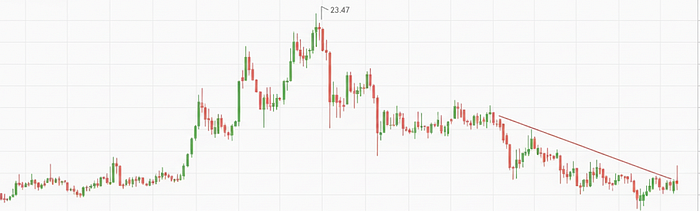
Did you know market makers aren’t magicians? They’re planners. They decide in advance when to pump, when to distribute, and when to dump. If you’ve ever wondered why a stock that should be rising suddenly stalls — or why bullish news blasts across every channel right before the price collapses — you’ve brushed up against the invisible hand of market makers.
1. The Pre-Planned Rise and Dump
Market makers don’t gamble. They map out the rise, the selling zone, and the exit strategy before the first candle even forms.
When the stock hits its target range, distribution begins. At first, it looks like normal selling. Then, volume creeps higher, momentum stalls, and prices start wobbling. That’s not “weak buyers” — that’s whales offloading chips into your hands.
2. When a Stock Refuses to Rise (Despite Great Fundamentals)
Everything looks perfect — fundamentals are solid, technical traders scream bullish, and sentiment is strong — yet the stock won’t move higher. In fact, it may even drift lower.
But the market maker is unloading. They’re quietly selling while retail investors are still dreaming of another leg up. By the time the truth is obvious, the dump is already in motion.
3. The Hype Machine: News Everywhere
If you have found every news media buzzing with the same “hot stock”? TV experts, financial magazines, blogs, and Twitter threads — all hyping one ticker with stories of restructuring, growth, or game-changing partnerships.
That’s not coincidence. That’s a coordinated smokescreen. Market makers use media noise to pump excitement, creating liquidity for their exit. Retail money rushes in, because they’ve found the next rocket, while whales quietly slip out the back door.
4. Price Detached from Reality
When a stock has doubled, tripled, or even multiplied by ten, ask yourself: has the business truly grown that fast? Or has the price simply outpaced value?
If the stock is “overdrawn” — trading far above intrinsic worth — the only thing keeping it afloat is hype. Market makers know this too, and they’ll ride the wave until it peaks. But once distribution is complete, gravity takes over.
Don’t Be the Exit Liquidity
Whales and market makers aren’t villains — they’re professionals playing their game. The problem? Retail traders often become the exit liquidity.
So, if you want to avoid being the one holding the bag:
- Watch for planned stalls after a big run.
- Don’t trust hype cycles without substance.
- Question why a stock that “should rise” isn’t moving.
Remember: when everyone’s bullish, someone’s already selling.


No comments:
Post a Comment